Built, and in daily testing with our first student

College is not the hard part. Everything else is.

Daily is a college assistant for students whose executive function gets in the way of what they already know how to do. It turns a syllabus, a routine, and a campus map into one calm plan, shows one step at a time, and never shames a miss.
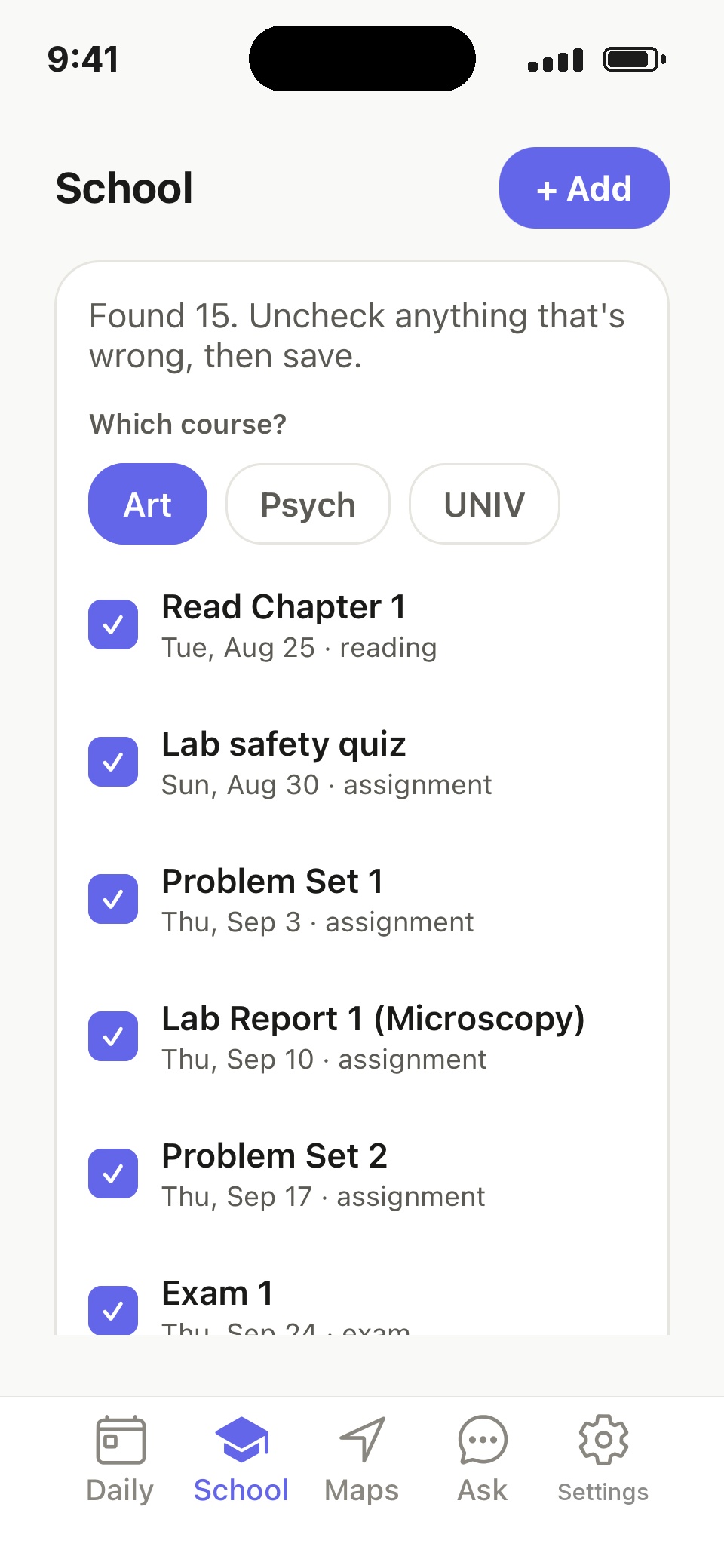
The School tab after reading a syllabus, listing the assignments it found with the message Found 15, uncheck anything that is wrong, then save
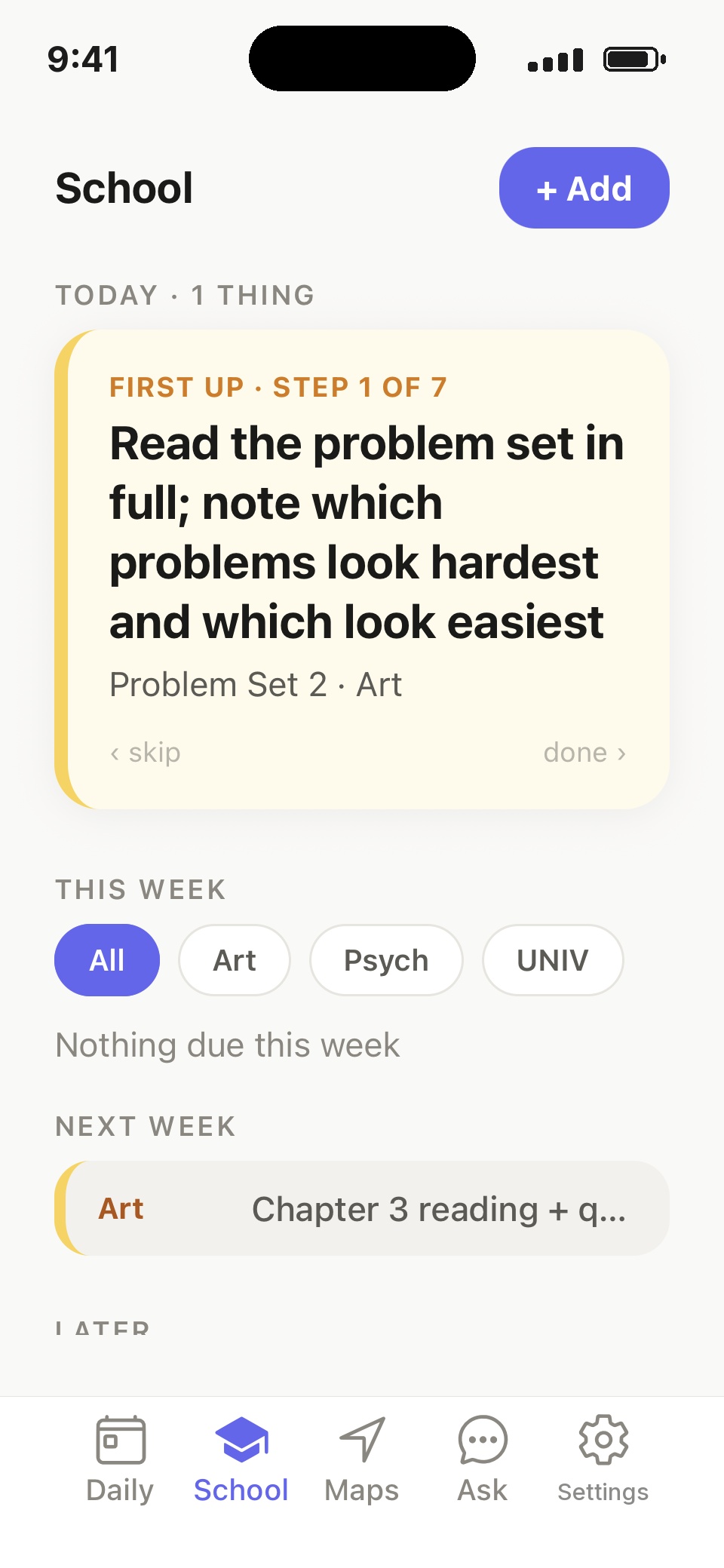
One step on screen, labelled first up, step 1 of 7, read the problem set in full
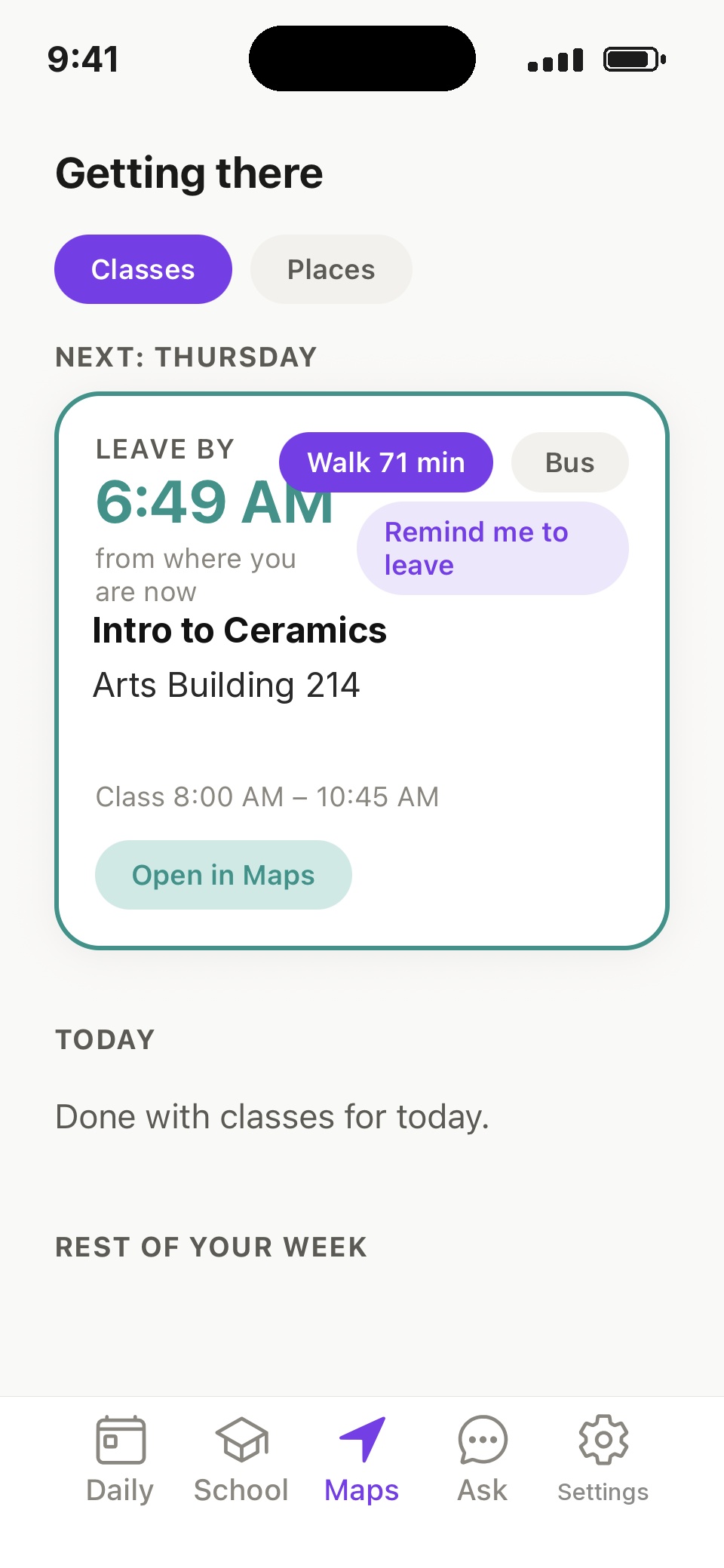
The Maps tab showing when to leave for the next class and how long the walk takes
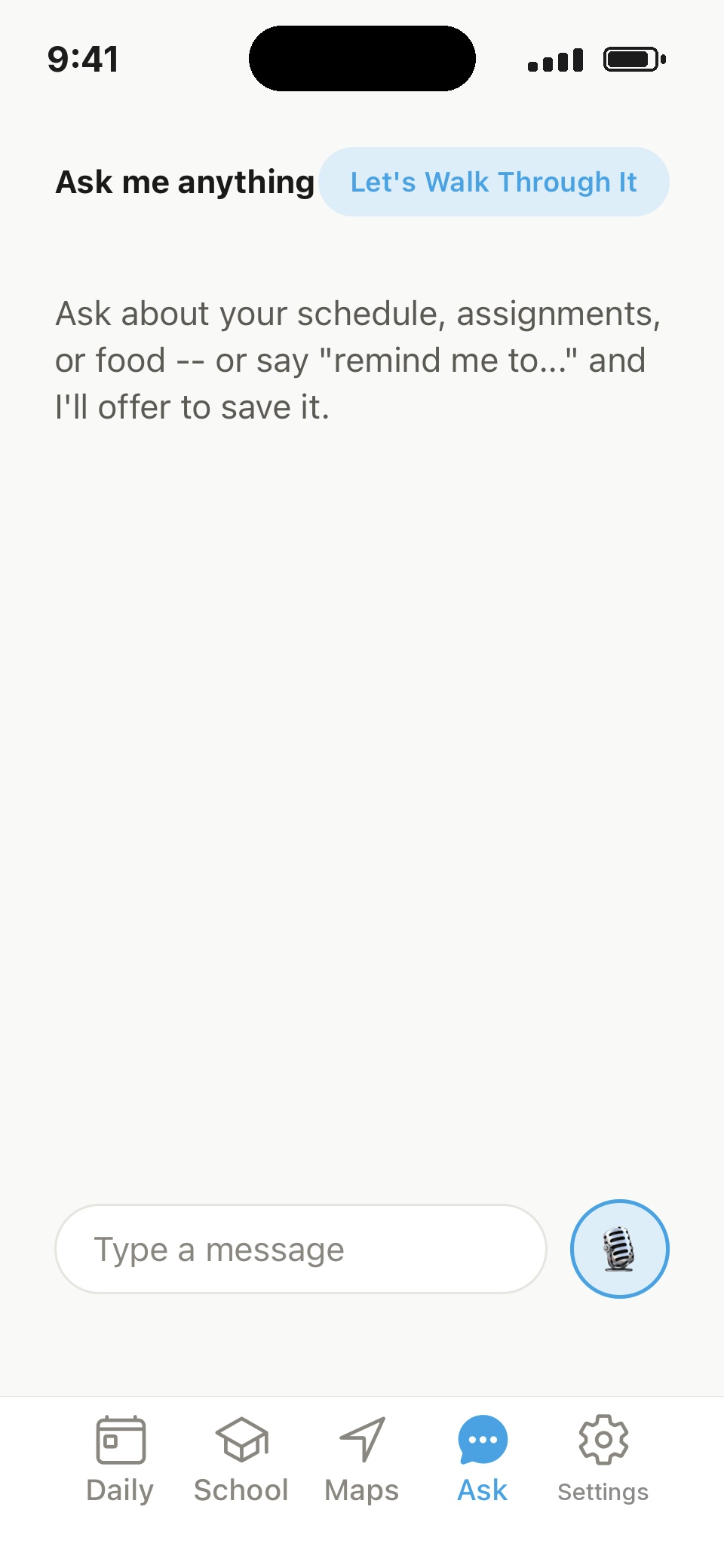
The Ask tab, where a student can ask about a schedule, an assignment, or food, or say remind me to
How Daily works

A student can understand the material completely and still fail the class.

The class is not only the material. It is a syllabus hiding three deadlines in a paragraph, an assignment that has to start nine days early, and a form nobody mentioned. Daily takes that layer.

01

It reads the syllabus

Type it, paste it, photograph it, or upload the PDF. Daily pulls out the assignments and asks for confirmation on each one before anything is saved.

Type in an assignmentPaste syllabus textPhoto of syllabusSyllabus PDF
02

It plans before anyone asks

The moment an assignment is saved, Daily works out a day by day plan in the background, weighted toward starting early. The plan exists before the decision to plan does.

Planned ›This weekNothing due this week
03

It shows one thing at a time

One task on screen, not a list. A skipped task looks exactly like any other, with no red, no streak to lose, and no language about being behind.

Up nextDoneSkipThat’s everything for today.
The part that matters most

The plan asks your permission.

Software built for neurodivergent users usually assumes it got the person right. Daily assumes it might be wrong, and asks.

If the plan is off, you do not have to explain why. You tap the reason that fits, and the plan is rebuilt around it. “Can’t tell, just try again” is a complete answer, and it is never pressed for more.

The assistant carries the diagnostic weight. You do not.
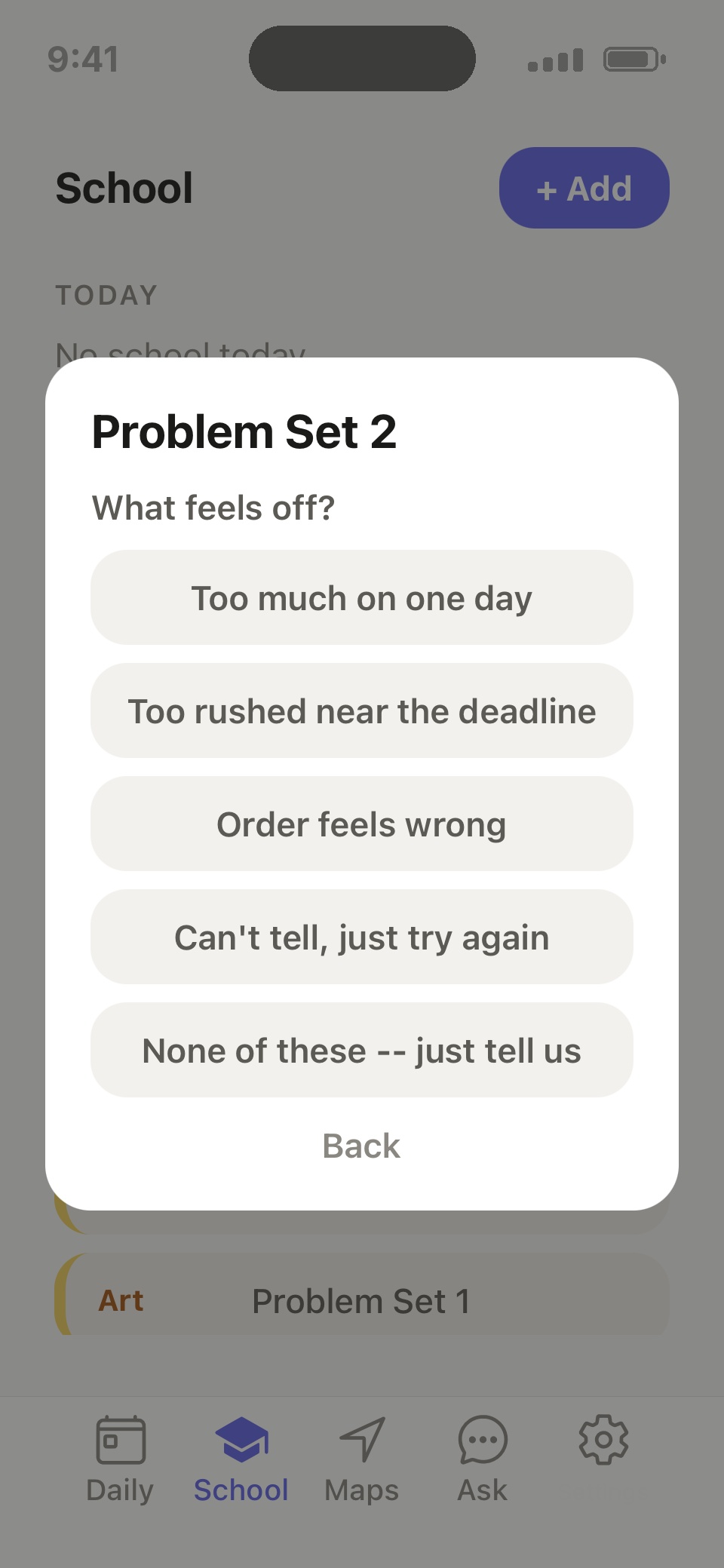
The Daily app asking What feels off, with the answers Too much on one day, Too rushed near the deadline, Order feels wrong, Can’t tell just try again, and None of these, just tell us
What Daily will never do

Five things Daily will not do to you.

·
No school dashboards. No compliance reports.Nothing institution-facing exists. Daily is your app and it goes where you go.
·
No parental locksYou are an adult. You can change or turn off any reminder in the app, including the ones that matter most.
·
We will never sell what you tell itNo ad networks. No third-party analytics or tracking. The AI runs on commercial terms that do not train on your data.
·
Delete means deletedYour chats are encrypted, expire on their own after a semester, and when you delete one the app says plainly: it gets erased everywhere, including my copy, and there is no undo.
·
The assistant never acts on its ownEvery single thing the AI proposes waits for you to confirm it. Nothing is ever written into your day without a tap.
Why it works this way

We took out the parts that make apps sticky.

Streaks, leaderboards, nagging, a red mark when you miss. Every one of those makes an app grow, and every one of them is wrong for the person Daily is built for. These are the six rules it is built to instead.

Bounded choiceEvery prompt offers two or three tappable options, never an open text box. “I don’t know” is always one of the acceptable answers.
No naggingOne reminder, one named follow-up, then silence. Never “you still haven’t.” Finishing something cancels everything queued behind it.
Nothing visible to anyone elseNothing on the screen, the lock screen, or the watch face reveals a disability, a diagnosis, or a medication. The app’s name gives nothing away.
Worked, not rightNever right or wrong, never good or bad, anywhere in the product. Right and wrong trigger binary thinking and shame, and shame is what stops the next attempt.
Specific, not vague“Quick rinse” counts as a full success. Done means a concrete, minimal, stated thing, not a standard someone has to guess at.
Competition with no oneNo leaderboards, no comparison to other students, no streak that can be lost. The only measure is your own.